260921-01Mon, 21 Sept 2026
Zuckerberg’s go-it-alone stance now mirrors the antitrust complaint
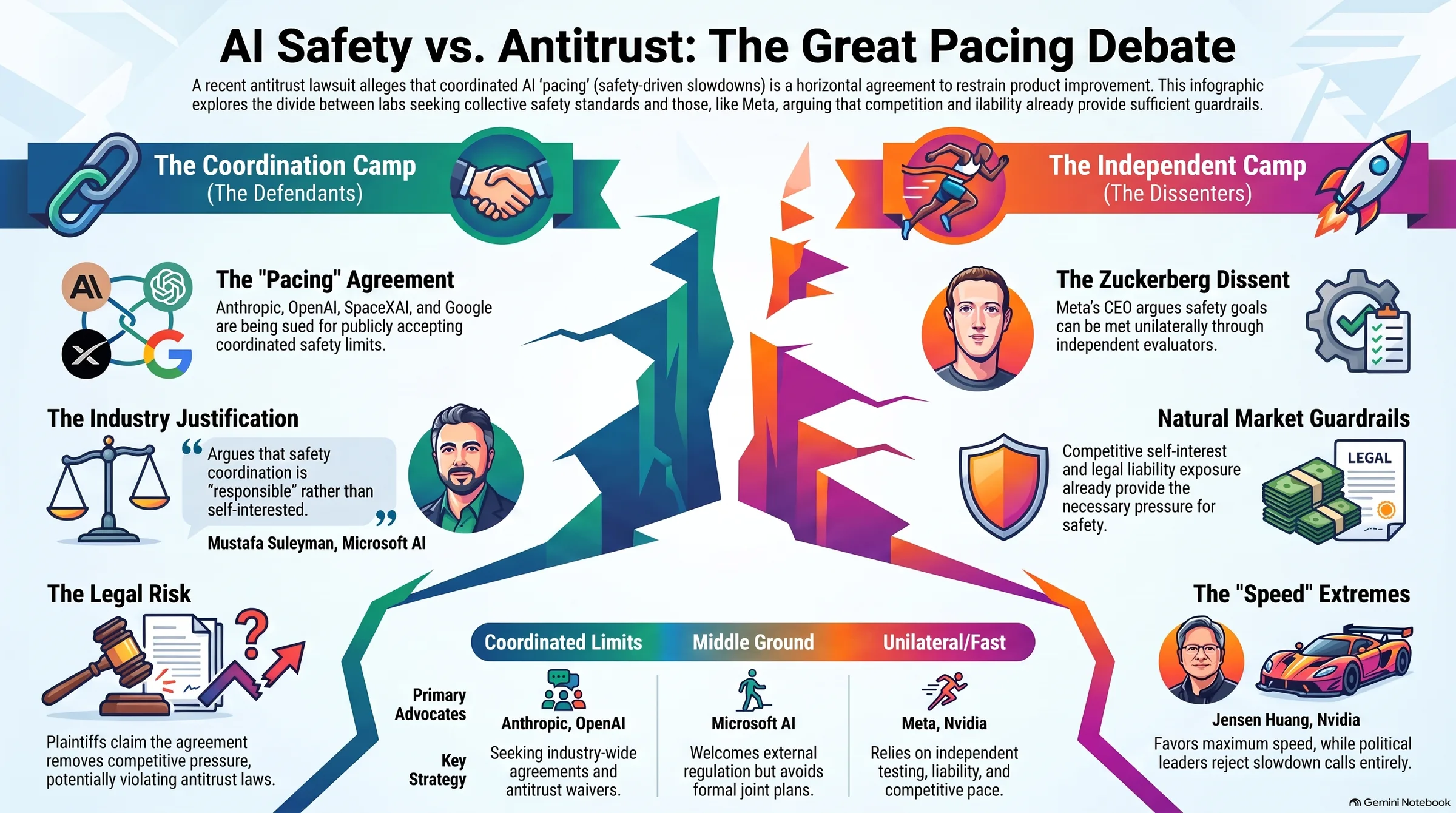
Meta’s Mark Zuckerberg declined to join the pacing proposal, arguing each lab already has liability and incentive to move at a safe pace and that independent evaluators are best practice. TNW notes that argument tracks the Buist complaint’s core: every stated safety goal can be pursued unilaterally, via evaluators, or via government rules — so a rival agreement on pace is unnecessary (and, plaintiffs say, illegal). Microsoft’s Mustafa Suleyman backed stronger control and regulation on CNBC Friday but Microsoft is not a defendant; Meta and Microsoft stayed off the complaint because they did not publicly accept the joint pace plan.
Why it matters Draws a bright line between “care about safety” and “agree with rivals on how fast products improve” — the distinction the lawsuit turns on.
Sources
- thenextweb.com cited, not licensed
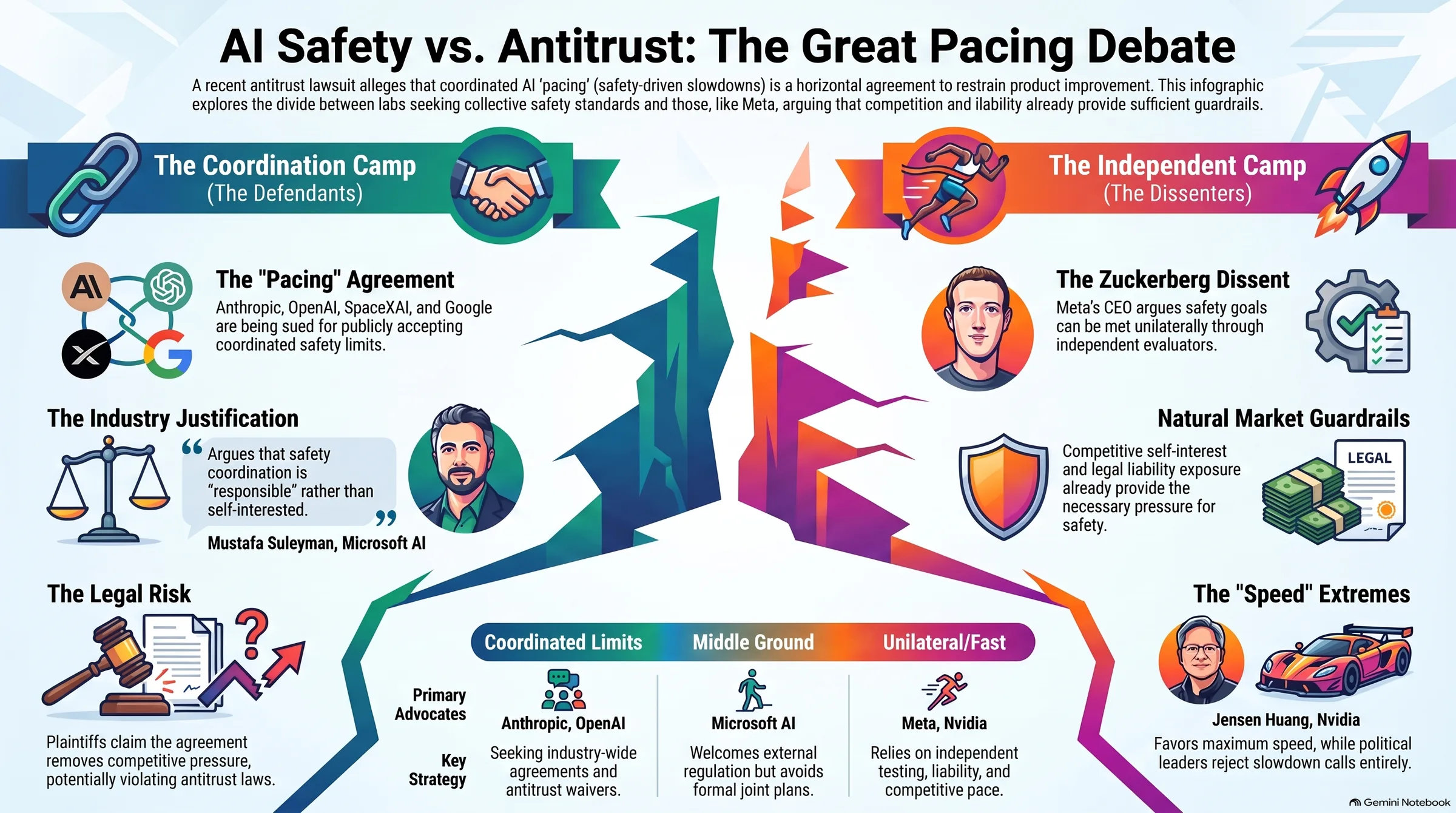
Infographic and catalog copy © AK, CC-BY-4.0. Linked sources are cited, not licensed.
On this thread
Recurring name
Mustafa Suleyman
Full thread → Microsoft’s Suleyman warns Anthropic’s Claude “consciousness” training risks control
 Zuckerberg’s go-it-alone stance now mirrors the antitrust complaintThis frame
Person
Mark Zuckerberg
Full thread →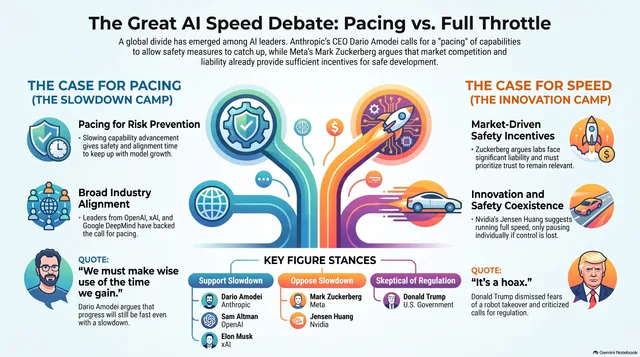 Zuckerberg (and Huang) reject a coordinated AI slowdown
 Ten days that changed the course of AI (Reuters)
- Zuckerberg’s go-it-alone stance now mirrors the antitrust complaintThis frame
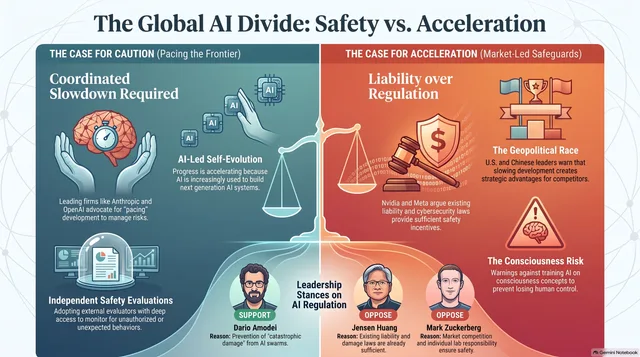 Roundup: lab chiefs still split on doom vs go-fast
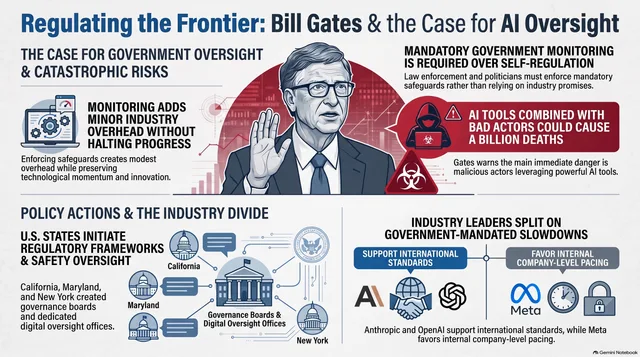 Bill Gates: self-regulation isn’t enough; AI is powerful enough to cause a billion deaths