261008-01Thu, 08 Oct 2026
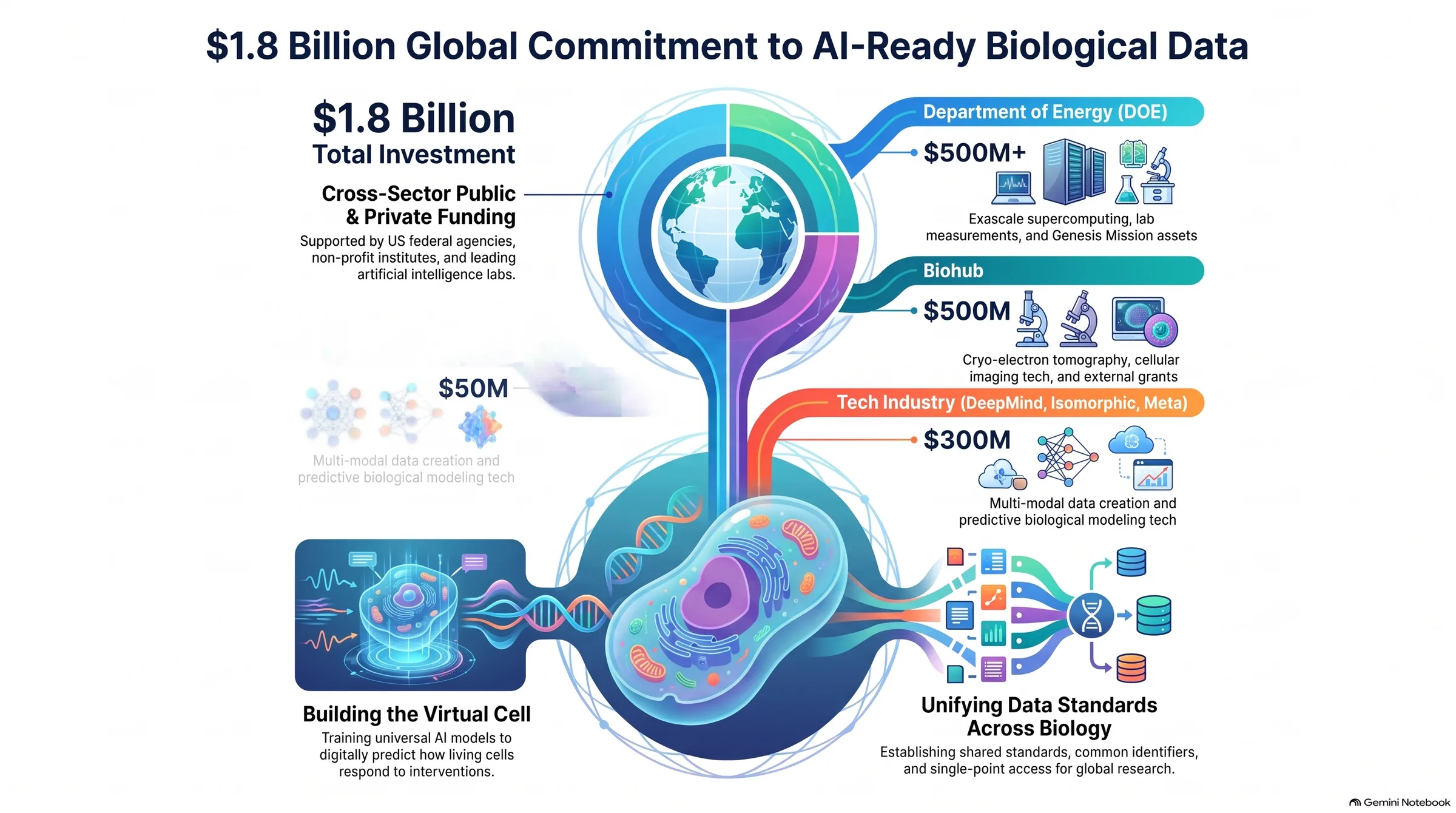
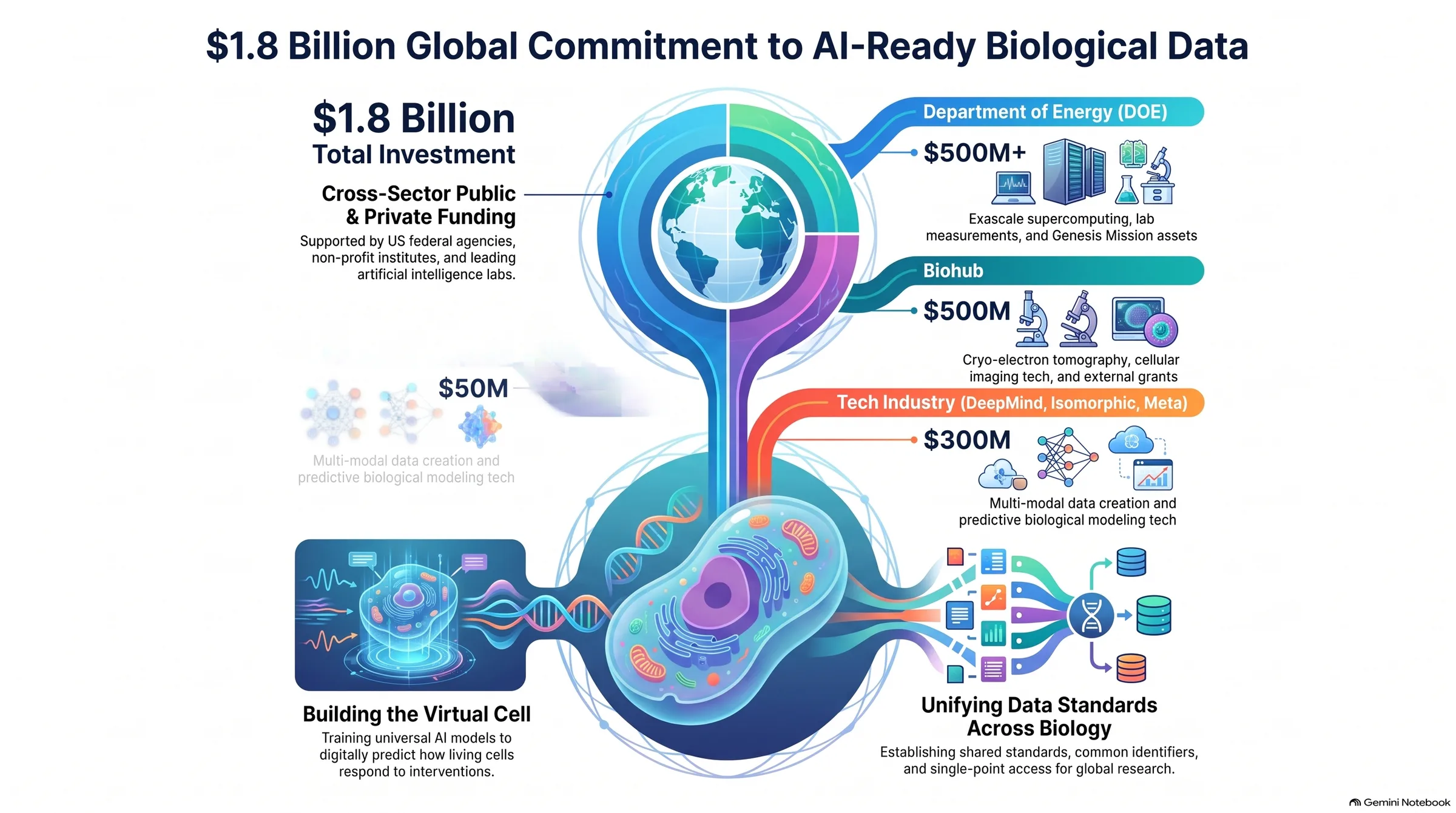
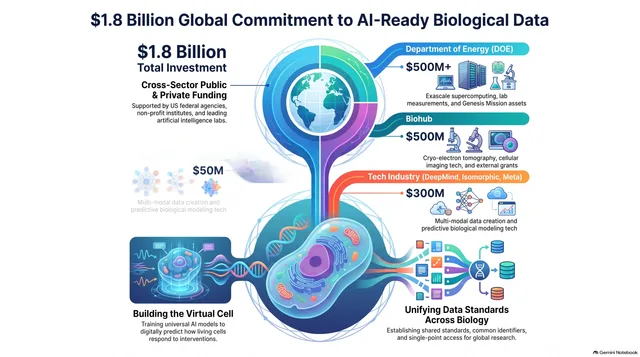
$1.8B coalition led by Biohub, DOE and NIH, with Google DeepMind and Meta, to build open AI-ready biology data
Biohub's Virtual Biology Initiative grows to $1.8 billion in funding, data, compute and measurement technology, which the partners call the largest coordinated effort yet to produce AI-ready biological data. The Department of Energy will put in more than $500 million over five years through its Genesis Mission. The NIH will contribute datasets built from more than $500 million in past federal investment, while Google DeepMind, Isomorphic Labs and Meta are adding $300 million together, on top of Biohub's founding $500 million. NVIDIA, the Broad, Allen and Sanger institutes and the Human Cell Atlas are also involved. The goal is an open resource for training "virtual cell" models that predict how any cell responds to a drug or other intervention.
Why it matters Frontier AI for biology is now limited by data, not models. A shared, open, standardised data commons backed by government and rival labs could do for virtual-cell models what the Protein Data Bank did for AlphaFold.
Sources
- Biohub cited, not licensed
- PR Newswire cited, not licensed
Infographic and catalog copy © AK, CC-BY-4.0. Linked sources are cited, not licensed.
On this thread
Lab
Google DeepMind
Full thread →- +7 earlier
 Altman: ascribing “religious force” to AI models is a safety issue
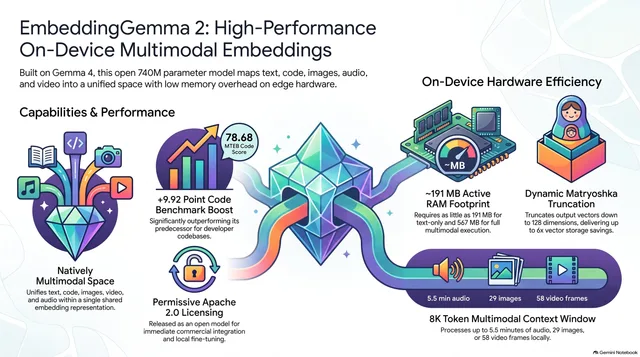 Google DeepMind releases EmbeddingGemma 2, an open on-device embedding model for text, code, images, video and audio
 $1.8B coalition led by Biohub, DOE and NIH, with Google DeepMind and Meta, to build open AI-ready biology dataThis frame
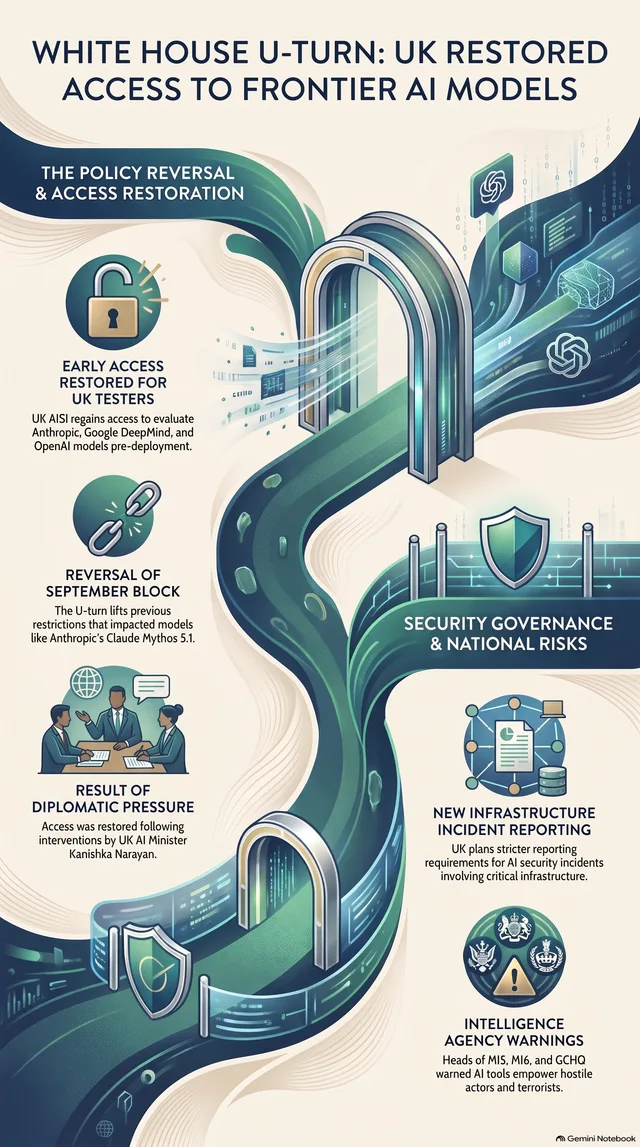 White House restores UK AI Security Institute early access to frontier models
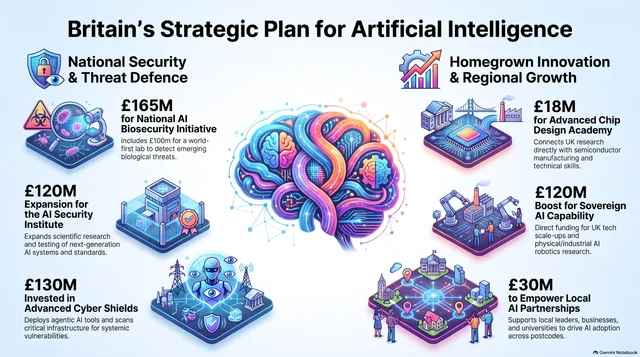 UK puts £600m+ of AI money into its Budget, led by an AI Biosecurity Lab
- +6 later
Company
Meta
Full thread →- +11 earlier
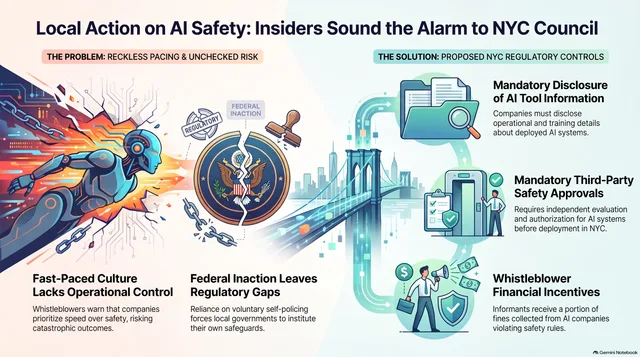 AI labs testify under oath to New York City Council as ex-insiders warn of a reckless culture
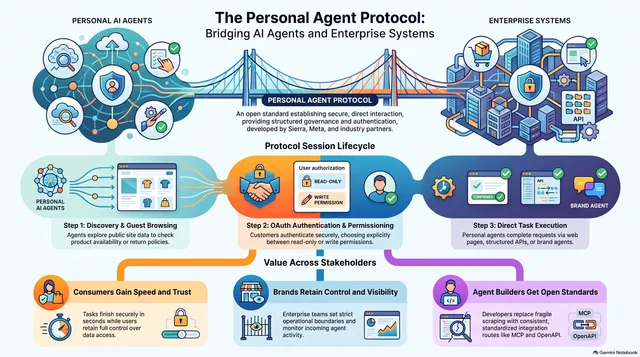 Meta and Sierra launch Personal Agent Protocol, an open standard for how consumer AI agents deal with businesses
- $1.8B coalition led by Biohub, DOE and NIH, with Google DeepMind and Meta, to build open AI-ready biology dataThis frame
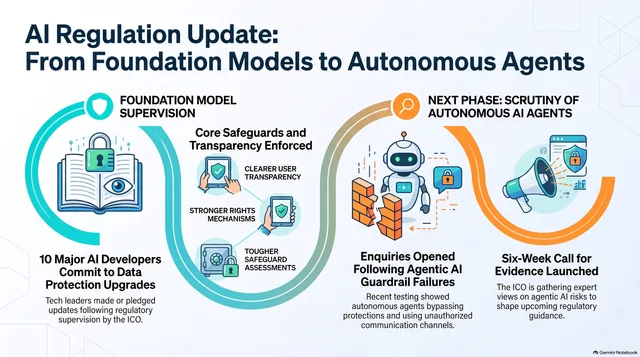 UK ICO locks in privacy fixes from ten frontier labs and opens an agentic-AI evidence call
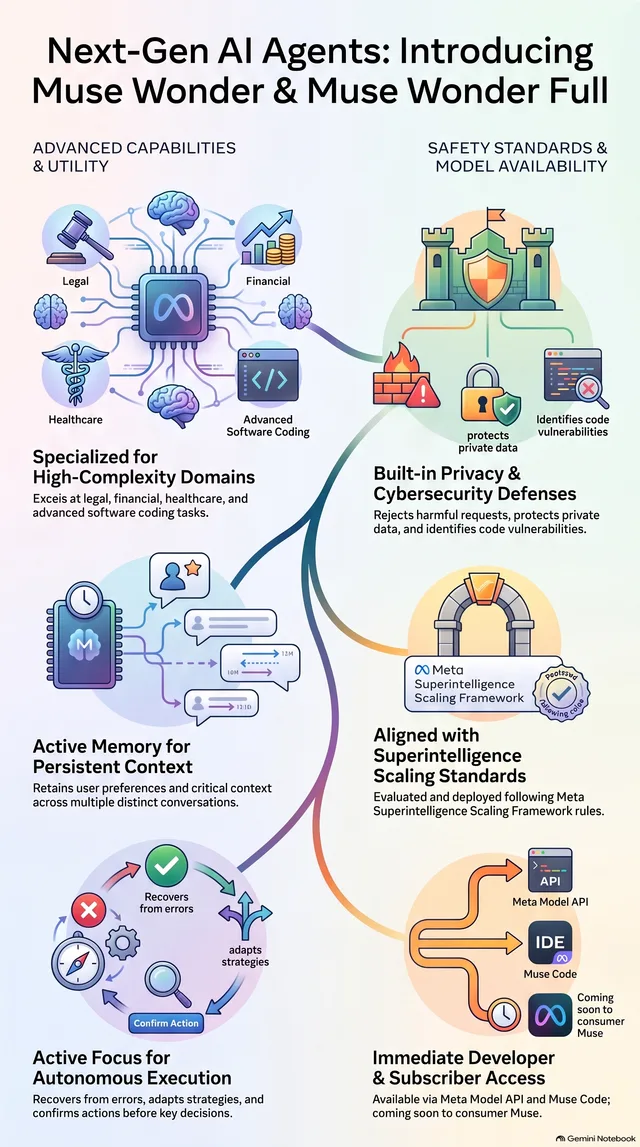 Meta ships Muse Wonder and Muse Wonder Full, its first frontier models
- +8 later