261017-01Sat, 17 Oct 2026
Anthropic shows Claude designing quantum circuits that beat the best published designs
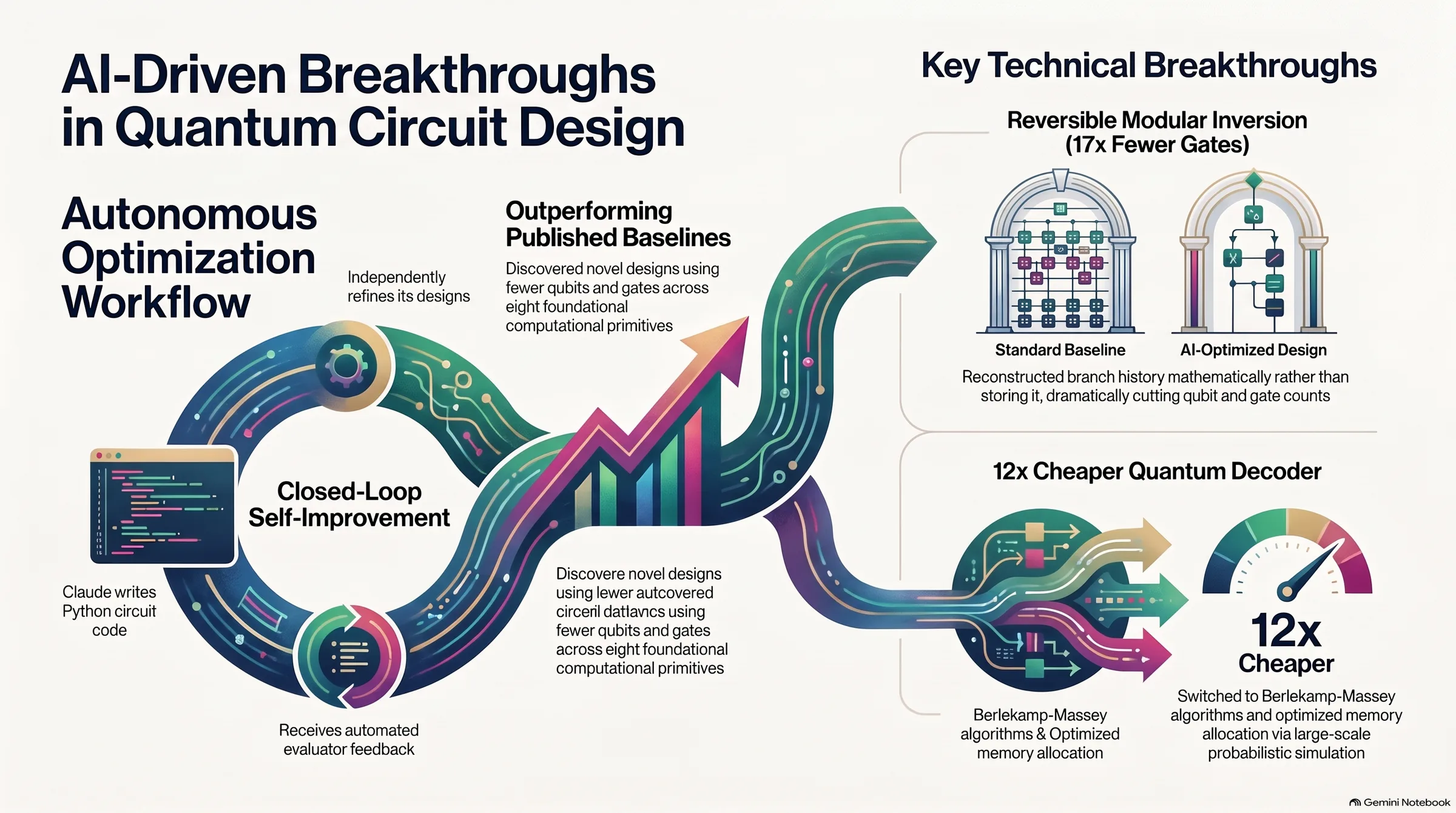
Claude Mythos 5 was given plain-language specifications for eight circuit-design tasks in chemistry, optimisation, physics simulation and number theory. It worked in a closed loop, with an automated evaluator checking each design and scoring it on qubits and gates. The paper reports circuits that use fewer Toffoli gates and fewer qubits than the published state of the art on seven tasks; one decoder for a quantum optimisation algorithm needs 12× fewer gates than Google's previous design. On the eighth task, elliptic-curve point addition, a 53-hour run produced a new reversible method for modular inversion, and Claude formalised the key claim in Lean. One circuit from that family uses 12% more qubits but 17× fewer gates than the smallest previous design. The work was led by Andi Gu through Anthropic's STEM Fellows Program, with Harvard's Susanne Yelin and Mikhail Lukin (Harvard and QuEra).
Why it matters Cheaper circuits mean useful quantum computations need less hardware, so they could arrive sooner. Elliptic-curve point addition is also the core step in quantum attacks on elliptic-curve cryptography. This is a strong example of the "evaluator in the loop" pattern: the model can propose bold designs because an independent checker decides whether they are correct. Anthropic also notes Claude was overly cautious early on and needed nudging to try more novel approaches.
Sources
- Anthropic cited, not licensed
- arXiv paper cited, not licensed
- Crypto Briefing cited, not licensed
Infographic and catalog copy © AK, CC-BY-4.0. Linked sources are cited, not licensed.
On this thread
Product
Claude
Full thread →- +22 earlier
 Meta ships Muse Wonder and Muse Wonder Full, its first frontier models
 White House restores UK AI Security Institute early access to frontier models
 Anthropic shows Claude designing quantum circuits that beat the best published designsThis frame
 Nvidia releases open Nemotron 3.5 models as its RTX Spark laptops go on sale to run agents locally
 DeepSeek ships V4.1-Flash-1017 and opens its search engine as an API
- +18 later
Company
- +27 earlier
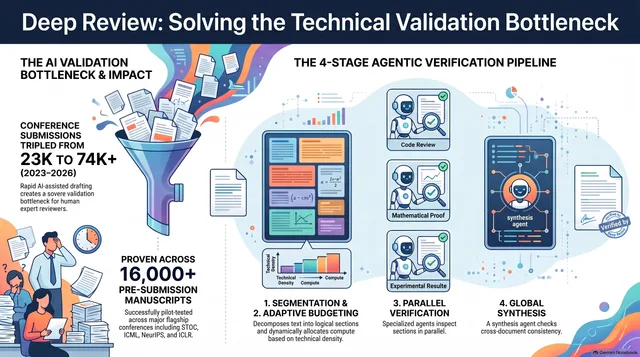 Google releases Deep Review, an agentic verifier for papers, legal and financial documents
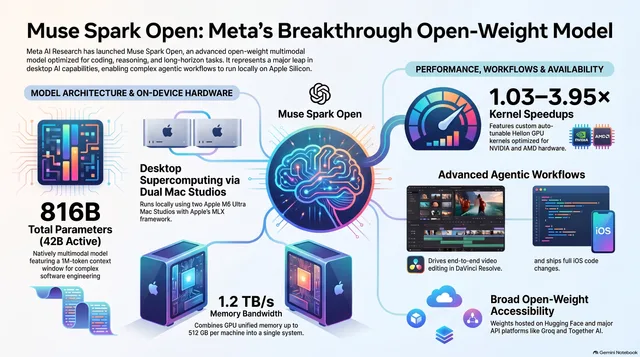 Meta releases Muse Spark Open, an 816B open-weight model built to run on two Mac Studios
- Anthropic shows Claude designing quantum circuits that beat the best published designsThis frame
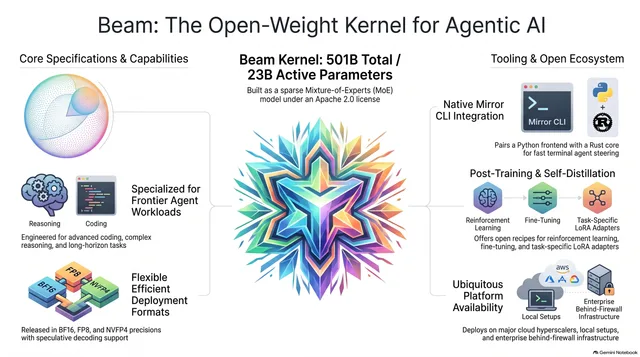 Reflection releases Beam, a 501B open-weight model, under Apache 2.0
 Anthropic offers Blackstone a double-digit yield to fund its Google chips
- +24 later