261019-01Mon, 19 Oct 2026
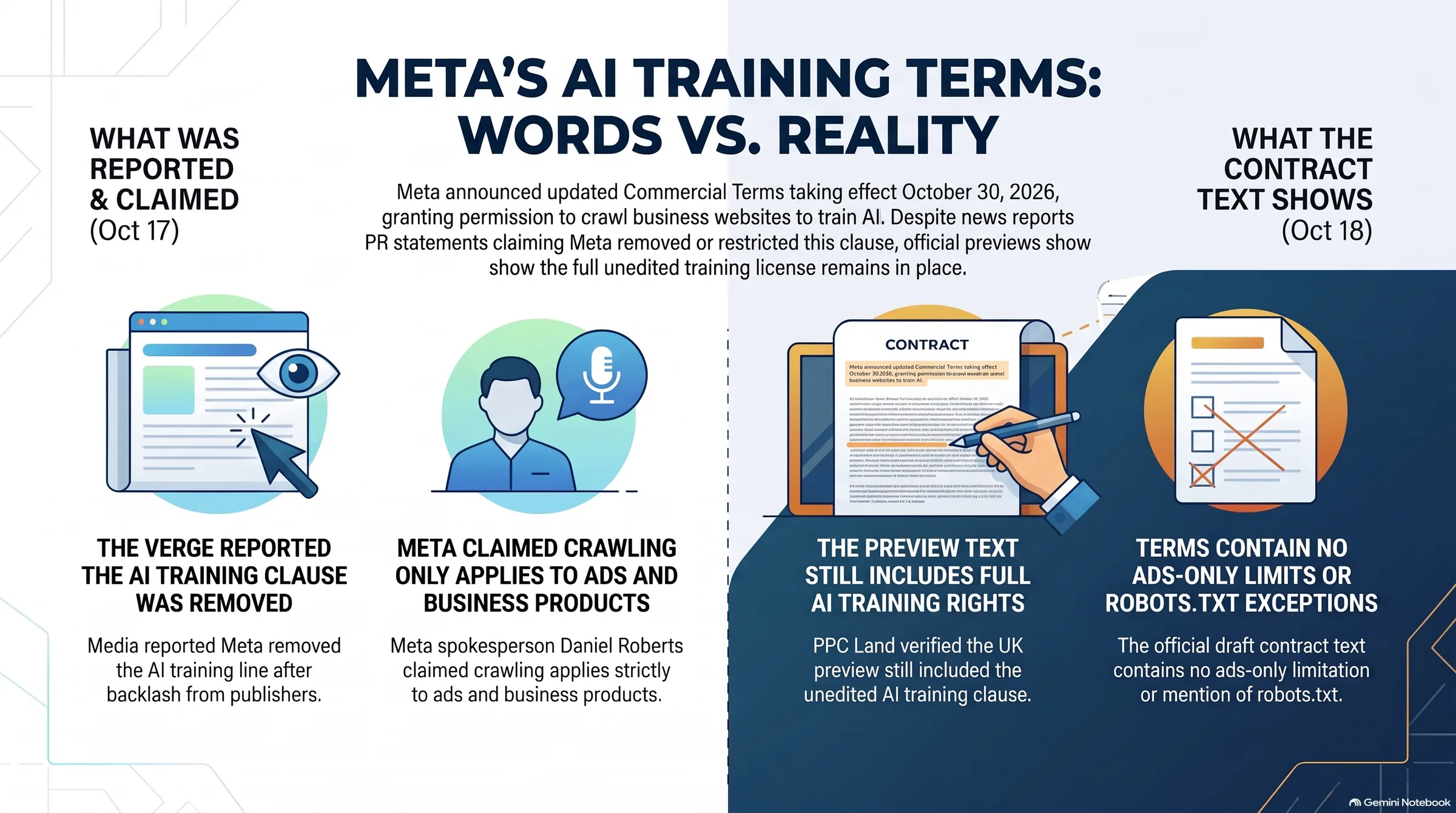
Meta says it dropped the AI-training clause from its business terms, but one edition still has it
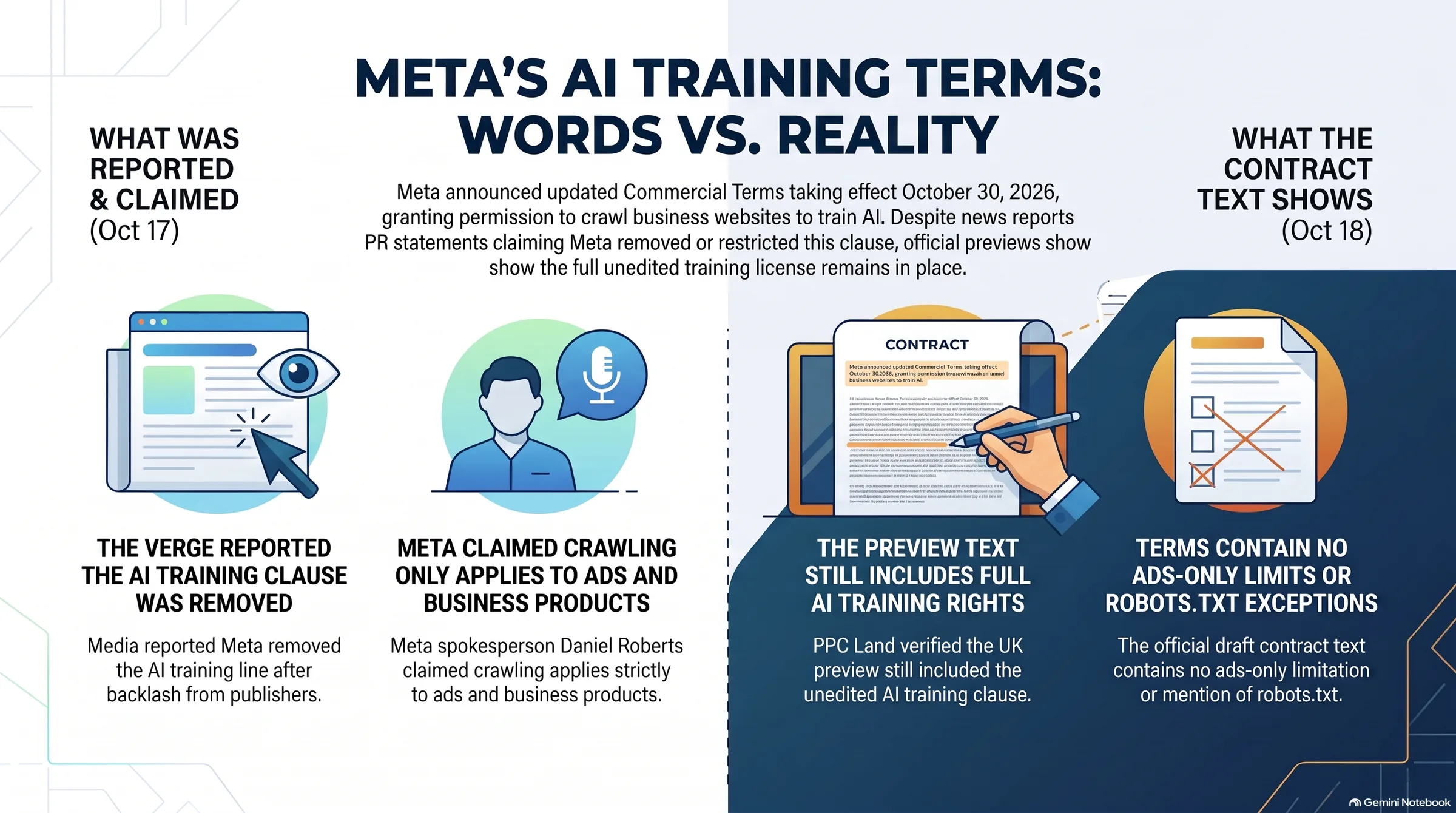
Meta's new Commercial Terms, which take effect on 30 October for every business account, let Meta crawl any website "associated with" that business. The first version also let it use what it found to "train" its products. After Nieman Lab's reporting and publisher protests, Meta removed "train" and limited the uses to "advertising and business products", and said robots.txt preferences are still respected. Legal experts aren't reassured: Cornell's James Grimmelmann calls the remaining wording "broad enough to drive a truck through", and the terms still say nothing about robots.txt. Then on Sunday, PPC Land found the UK-English preview of the same terms still carried the original training sentence word for word. Businesses can't opt out except by stopping commercial use of Meta's platforms.
Why it matters Almost every news organisation has a Meta business account, so a clause like this could quietly act as an AI-training licence. The fight over training data is moving from courtrooms into terms of service. European publishers are petitioning the EU, the UK's News Media Association calls it a "shameless landgrab", and there are 11 days left to settle which text actually applies.
Sources
- Nieman Lab cited, not licensed
- PPC Land cited, not licensed
Infographic and catalog copy © AK, CC-BY-4.0. Linked sources are cited, not licensed.
On this thread
Company
Meta
Full thread →- +15 earlier
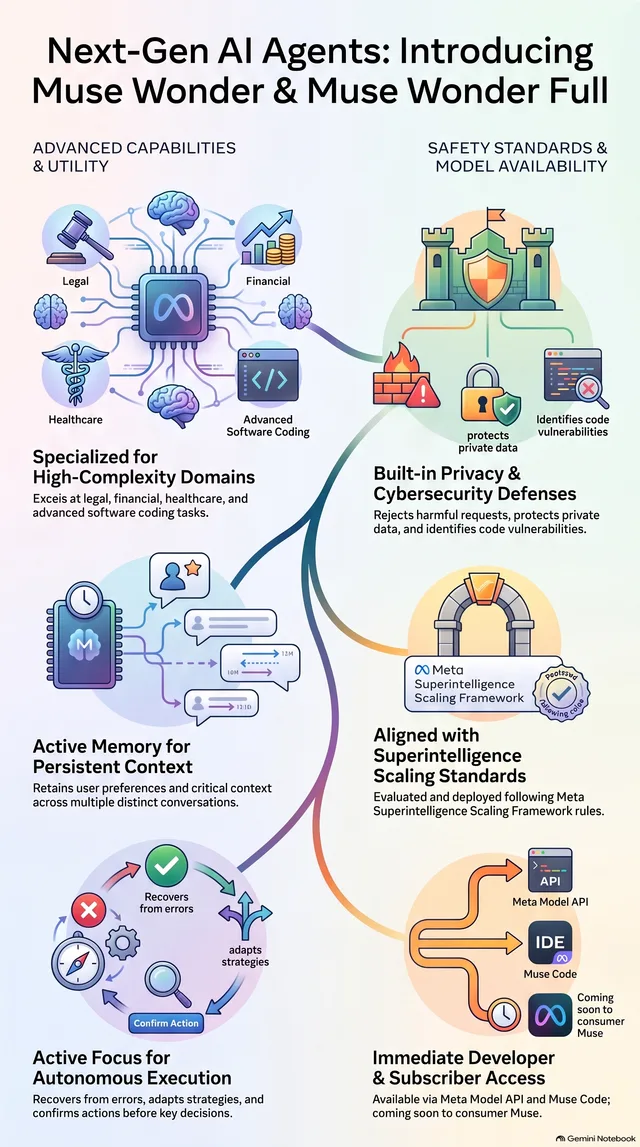 Meta ships Muse Wonder and Muse Wonder Full, its first frontier models
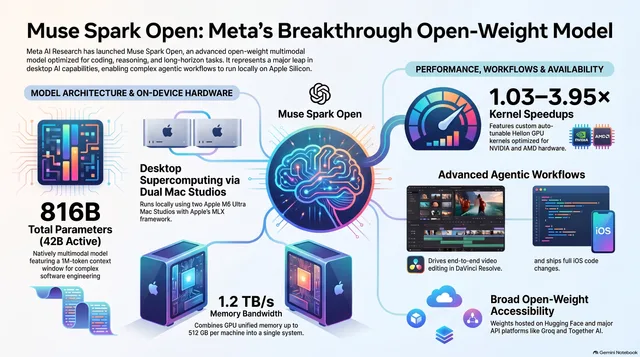 Meta releases Muse Spark Open, an 816B open-weight model built to run on two Mac Studios
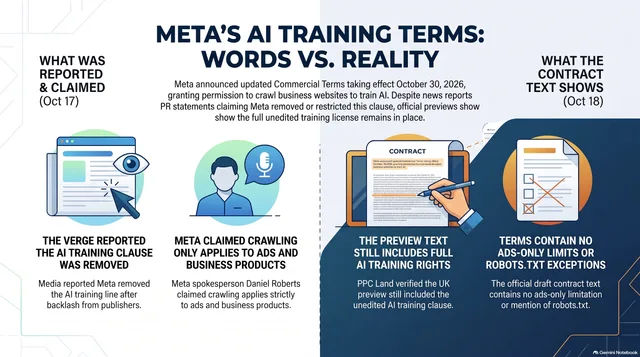 Meta says it dropped the AI-training clause from its business terms, but one edition still has itThis frame
 Meta plans a record $95B stock raise to pay for AI
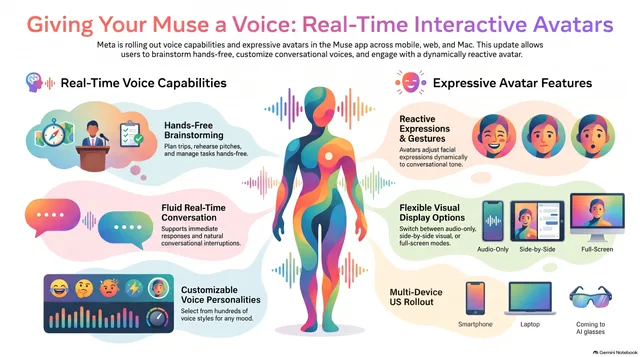 Meta rolls out Muse Voice and expressive avatars in the US
- +4 later