261020-01Tue, 20 Oct 2026
Inception's Mercury 3 shows diffusion language models can get much bigger without slowing down
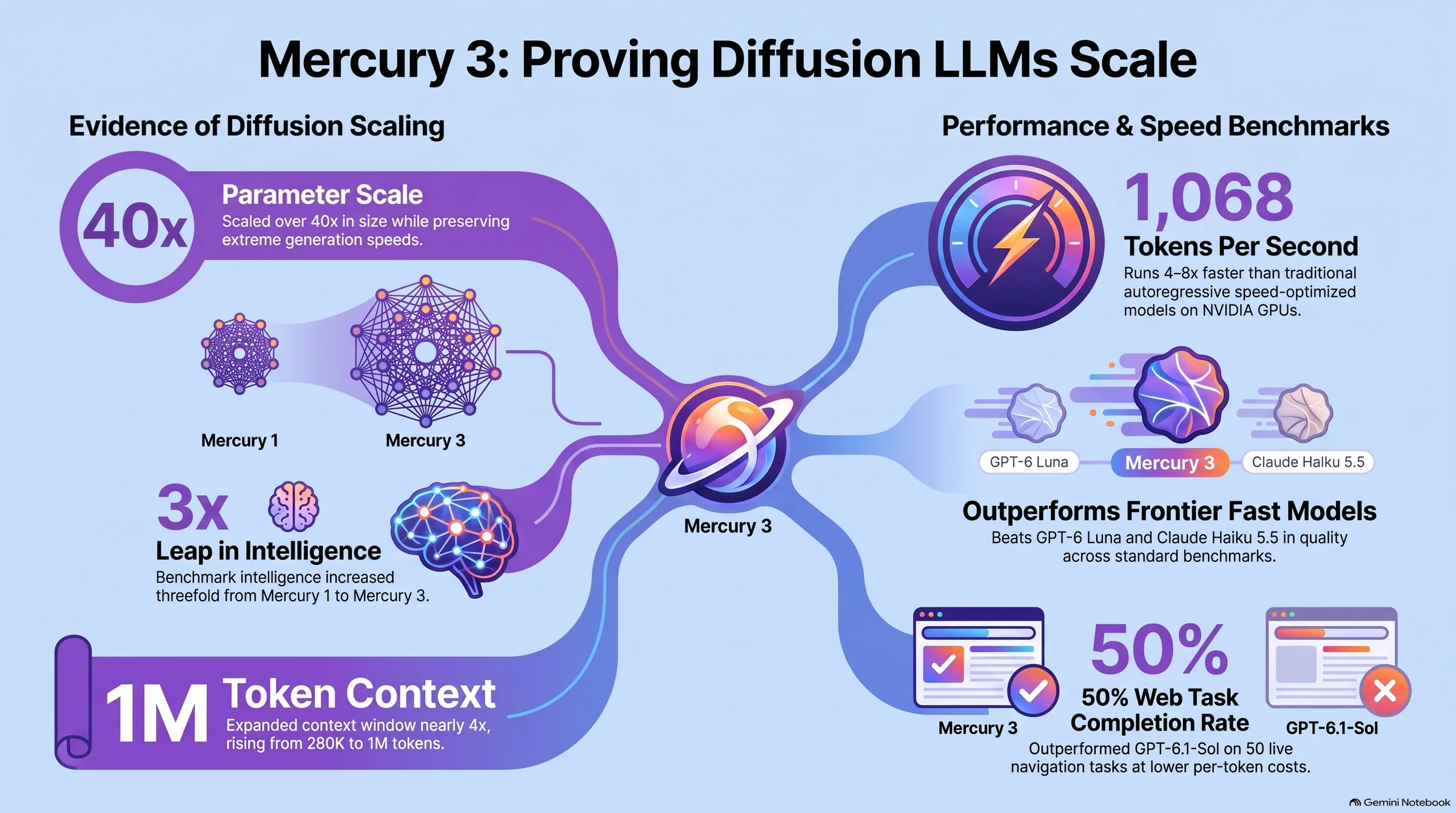
Most language models write one token at a time; Inception's Mercury models instead refine many positions in parallel, the way image diffusion models sharpen a picture. Mercury 3 is more than 40 times larger than Mercury 1, has a 1-million-token context window and runs at 1,068 tokens per second on Nvidia GPUs. Inception says it matches or beats speed-tuned frontier models such as GPT-6 Luna and Claude Haiku 5.5 while running 4 to 8 times faster, and one partner, TinyFish, says it finished 25 of 50 live web-navigation tasks, more than GPT-6.1 Sol. It costs $0.20 per million input tokens and $0.70 per million output (half that at launch), and it's on Inception's API, OpenRouter, Baseten and Vercel with an OpenAI-compatible interface.
Why it matters Agents wait on the model at every step, so raw speed compounds into finished work. If diffusion really follows the same scaling curve as ordinary models, the speed-versus-smarts trade-off gets much softer. All the quality numbers are Inception's or its partners' for now; independent benchmarks will tell.
Sources
- Inception: Introducing Mercury 3 cited, not licensed
- OpenRouter listing cited, not licensed
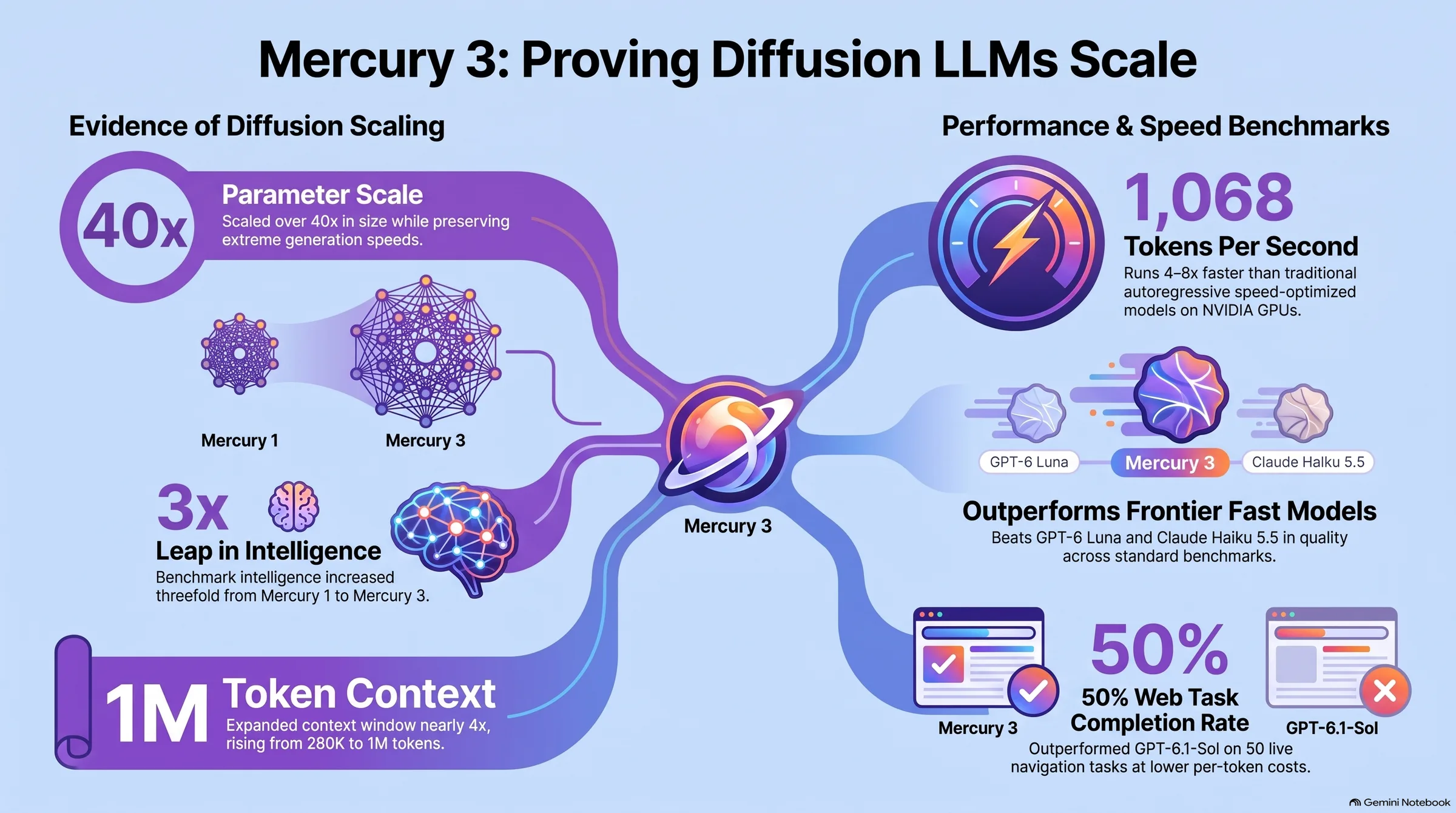
Infographic and catalog copy © AK, CC-BY-4.0. Linked sources are cited, not licensed.
On this thread
Recurring name
Baseten
Full thread → Meta releases Muse Spark Open, an 816B open-weight model built to run on two Mac Studios
 Inception's Mercury 3 shows diffusion language models can get much bigger without slowing downThis frame
Recurring name
Inception
Full thread →- Inception's Mercury 3 shows diffusion language models can get much bigger without slowing downThis frame
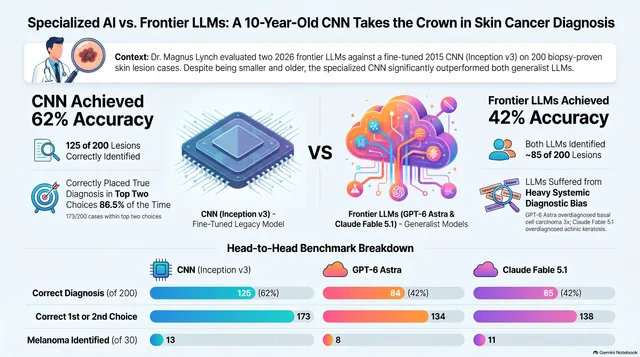 A 2015-era CNN beat GPT-6 Astra and Claude Fable 5.1 at spotting skin cancer