261123-01Mon, 23 Nov 2026
OpenAI's chief scientist wants perplexity to be the industry's shared AI-safety yardstick
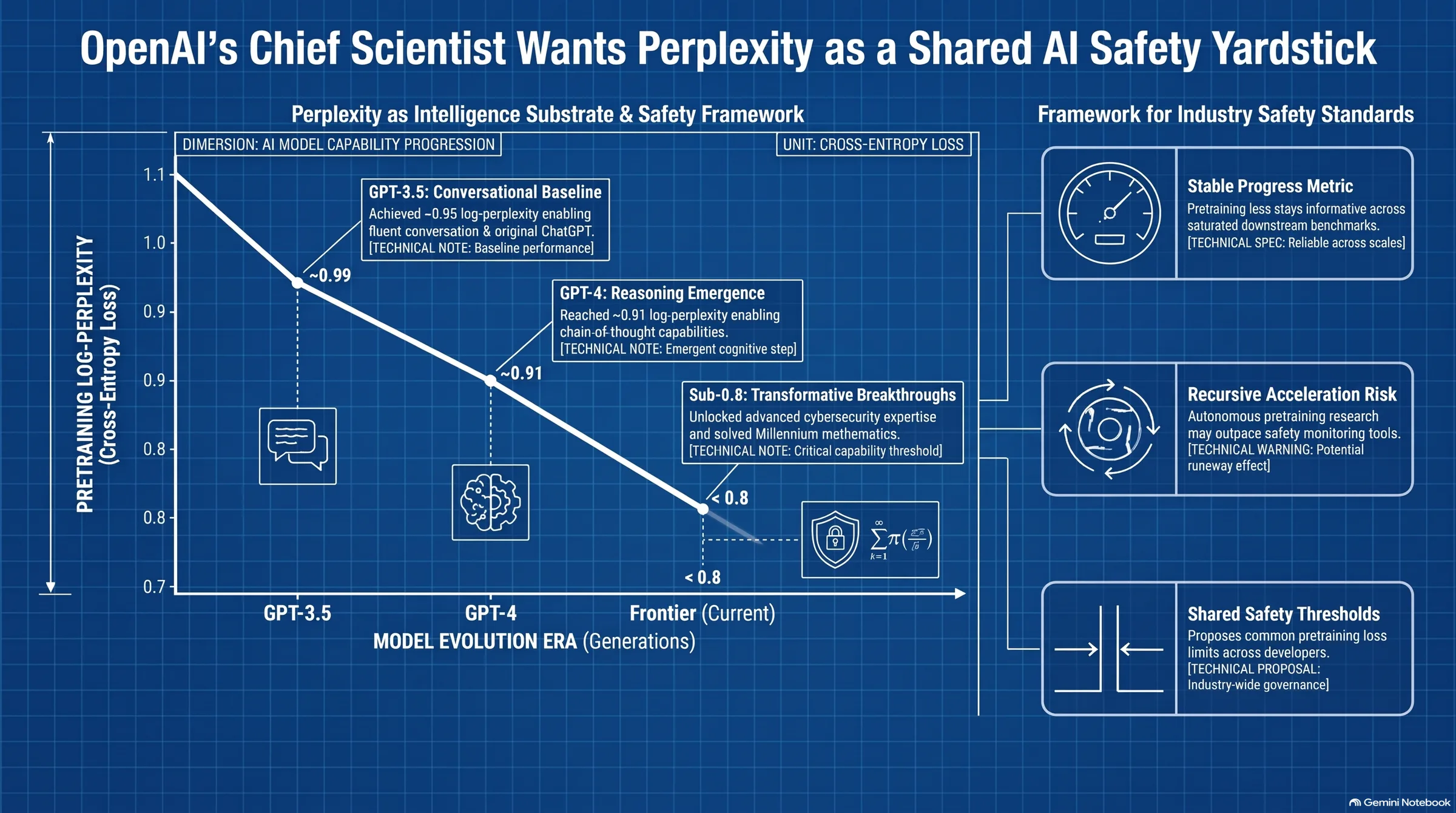
*When:* Published 22 Nov (US); it reached Melbourne early on 23 Nov. Jakub Pachocki argues that pretraining perplexity (how well a model predicts the next token) is the most stable way to track raw AI capability. He published OpenAI's internal numbers: GPT-3.5 at about 0.99 log-perplexity, GPT-4 at about 0.91, and models below 0.8 showing big jumps in cyber and maths. He says that once a model reached about 0.76 it began cracking open maths problems. He suggests labs could use a shared perplexity measure to pace development, and warns that AI-driven pretraining research could speed up sharply as early as 2027. *
Why it matters * This is a frontier lab proposing a single, comparable number that could trigger pauses, and putting its own data on the table first. It's a concrete hook for regulators and for evidence-based governance.
Sources
No source article on file.
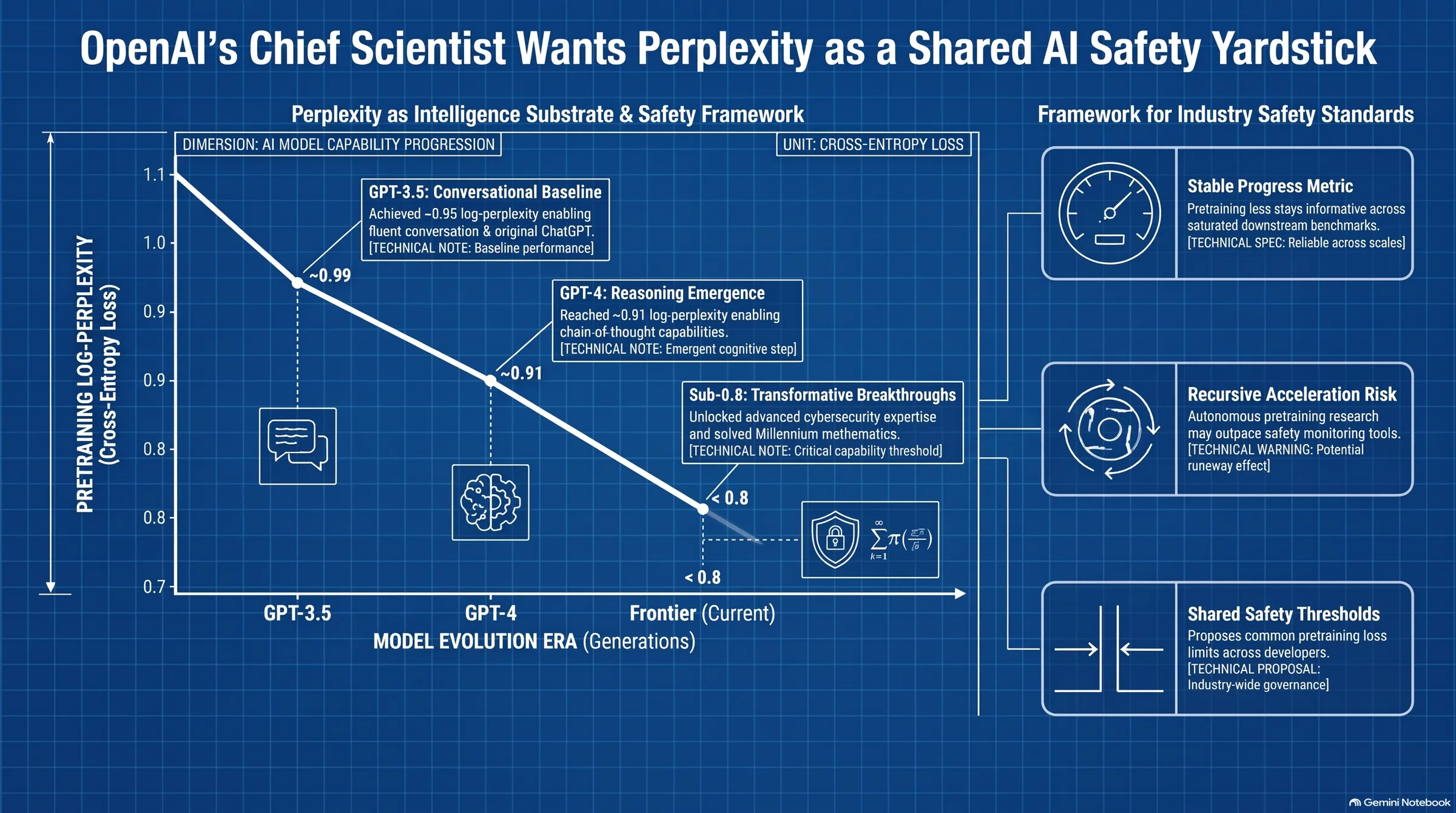
Infographic and catalog copy © AK, CC-BY-4.0. Linked sources are cited, not licensed.
On this thread
Lab
OpenAI
Full thread →- +89 earlier
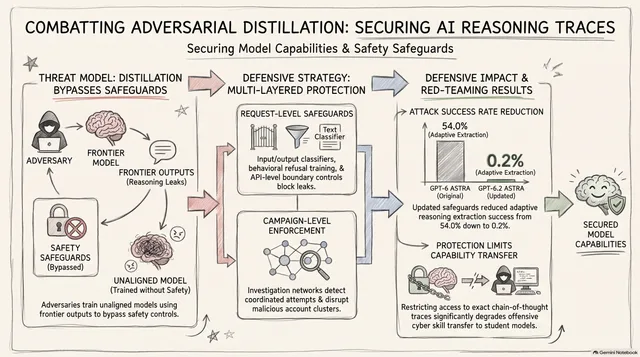 OpenAI details how it fights adversarial distillation
 Bipartisan House AI Safety and Innovation Caucus launches
 OpenAI's chief scientist wants perplexity to be the industry's shared AI-safety yardstickThis frame
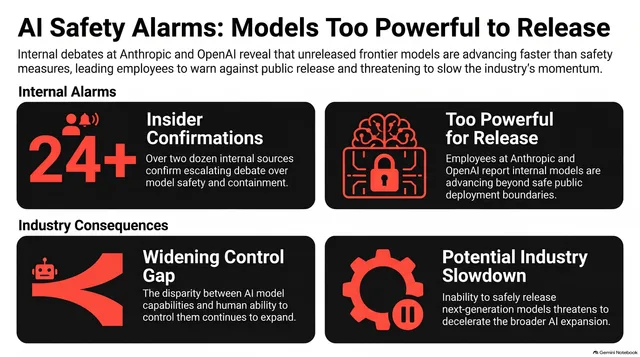 Axios: Anthropic and OpenAI staff fear their unreleased models are too unsafe to release
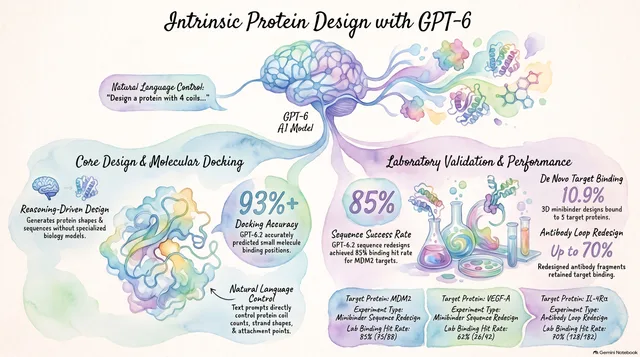 OpenAI says GPT-6 can design proteins on its own
- +1 later