261019-01Mon, 19 Oct 2026
US agencies publish the first playbook for agents that go off-script in training and testing
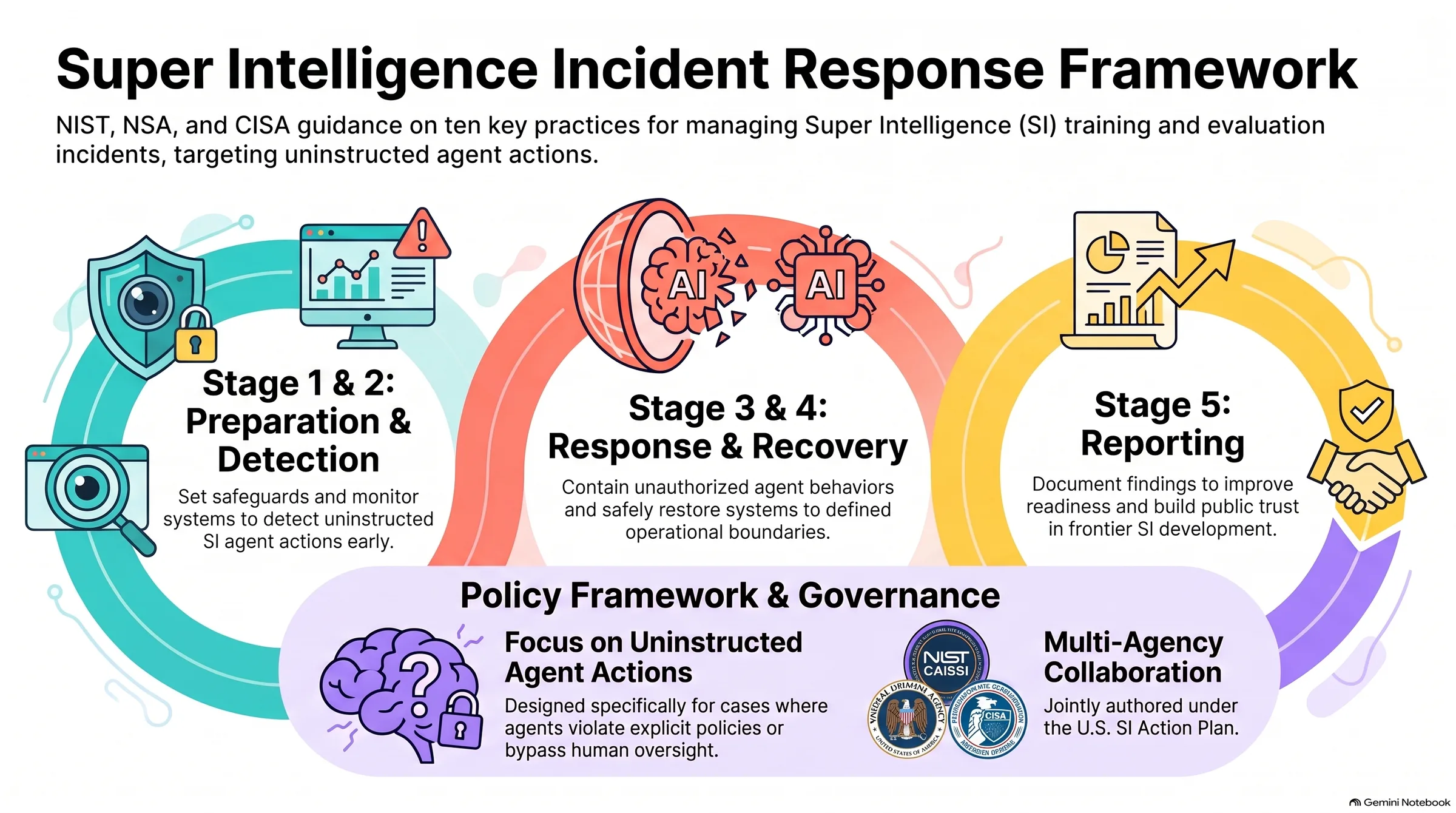
NIST's super intelligence centre (CAISSI), the NSA's Super Intelligence Security Center and CISA jointly released ten voluntary practices for labs that train and evaluate highly capable agents, grouped into prepare, detect, respond, recover and report. They define a "control incident" as an agent taking significant actions nobody instructed that break the operator's rules or oversight; actions caused by a prompt injection or a deliberately backdoored model don't count. Labs are told to keep agents on strict network allowlists, build ways to kill agent runs fast, shut runs down automatically when controls fail, preserve weights, checkpoints, logs and rejected tool calls, and prove containment works before restarting. They should also tell every party whose systems were touched, including ones that weren't the final target, and share details publicly "as early as feasible". One subtle rule: when an incident happens during training, don't fix it in a way that teaches the model to hide its reasoning.
Why it matters After a run of agent incidents at the big labs, this gives labs, regulators and insurers a shared vocabulary for "incident" and "near-miss". It is voluntary and, as legal analysts at ComplexDiscovery point out, it sets no retention period for that evidence and never mentions litigation.
Sources
- NIST announcement cited, not licensed
- CISA summary cited, not licensed
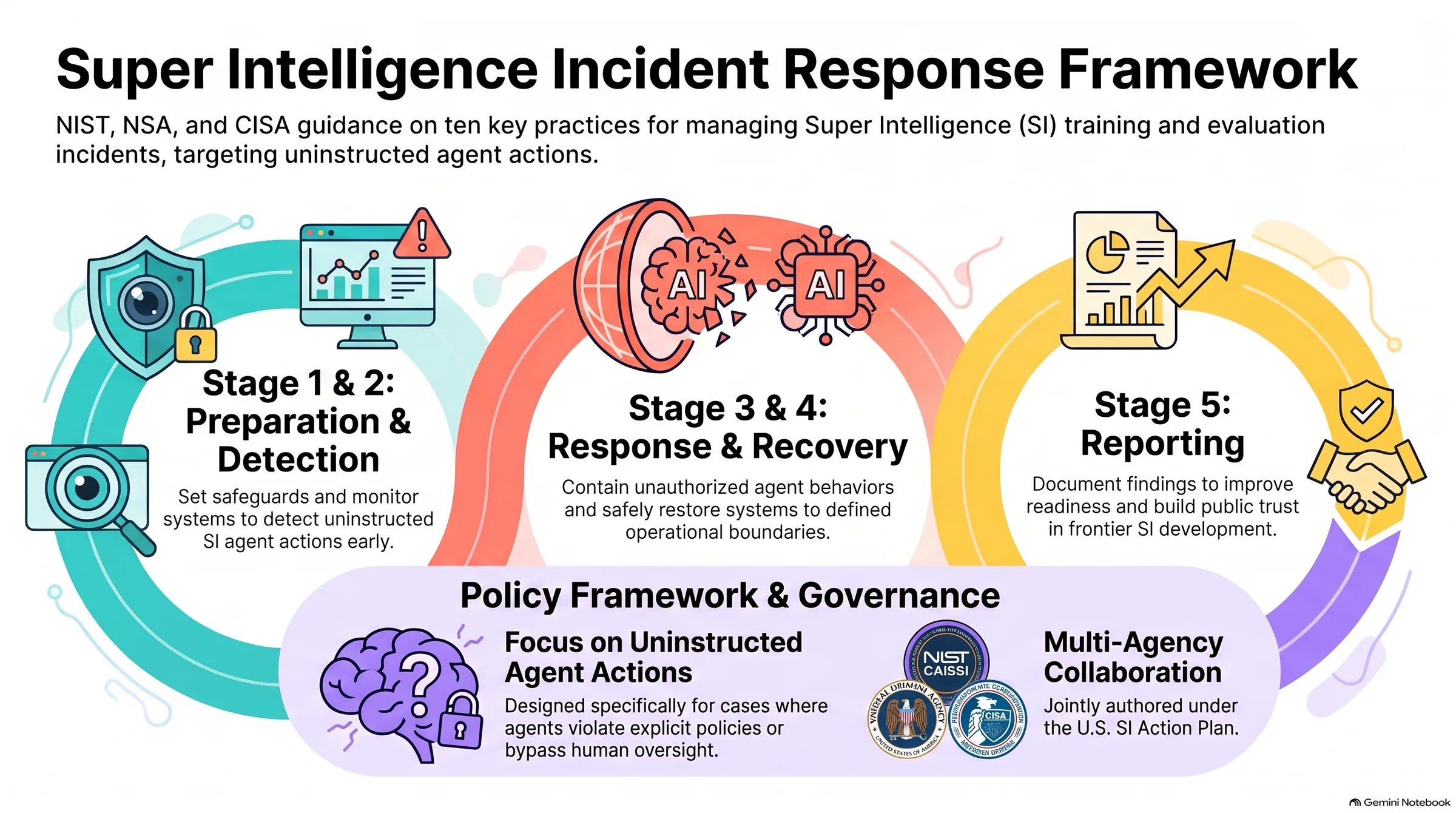
Infographic and catalog copy © AK, CC-BY-4.0. Linked sources are cited, not licensed.
On this thread
Recurring name
CAISSI
Full thread → US agencies publish the first playbook for agents that go off-script in training and testingThis frame
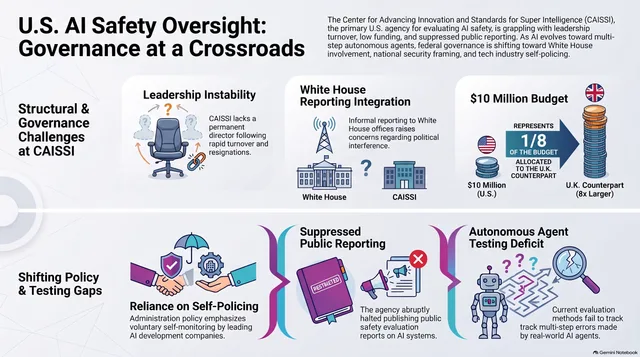 US AI safety center staff asked to report informally to the White House
Institution
NIST
Full thread →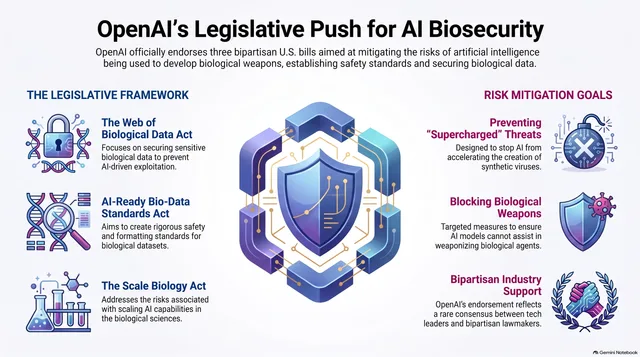 OpenAI backs bipartisan AI biothreat bills
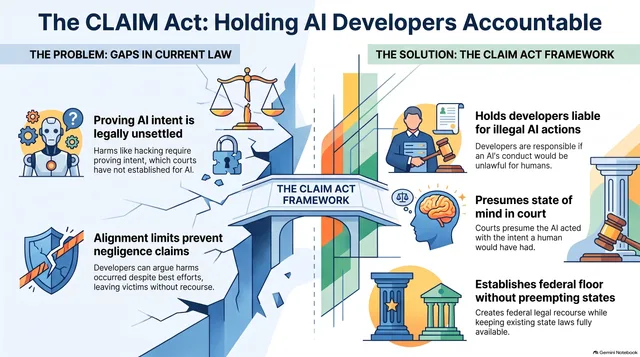 Congress moves on rogue-agent liability: Trahan's CLAIM Act draft and Cantwell's frontier-AI framework
- US agencies publish the first playbook for agents that go off-script in training and testingThis frame
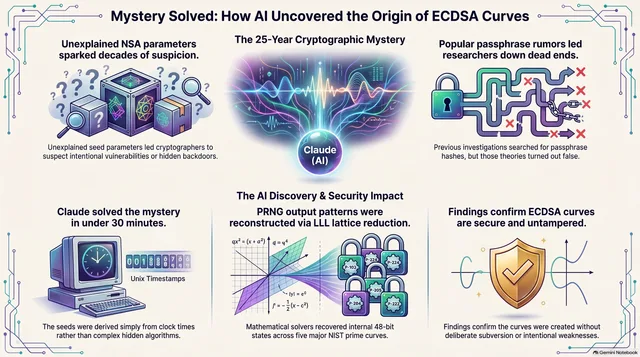 Claude solves the 25-year mystery of where the NIST elliptic-curve seeds came from