261019-01Mon, 19 Oct 2026
Claude solves the 25-year mystery of where the NIST elliptic-curve seeds came from
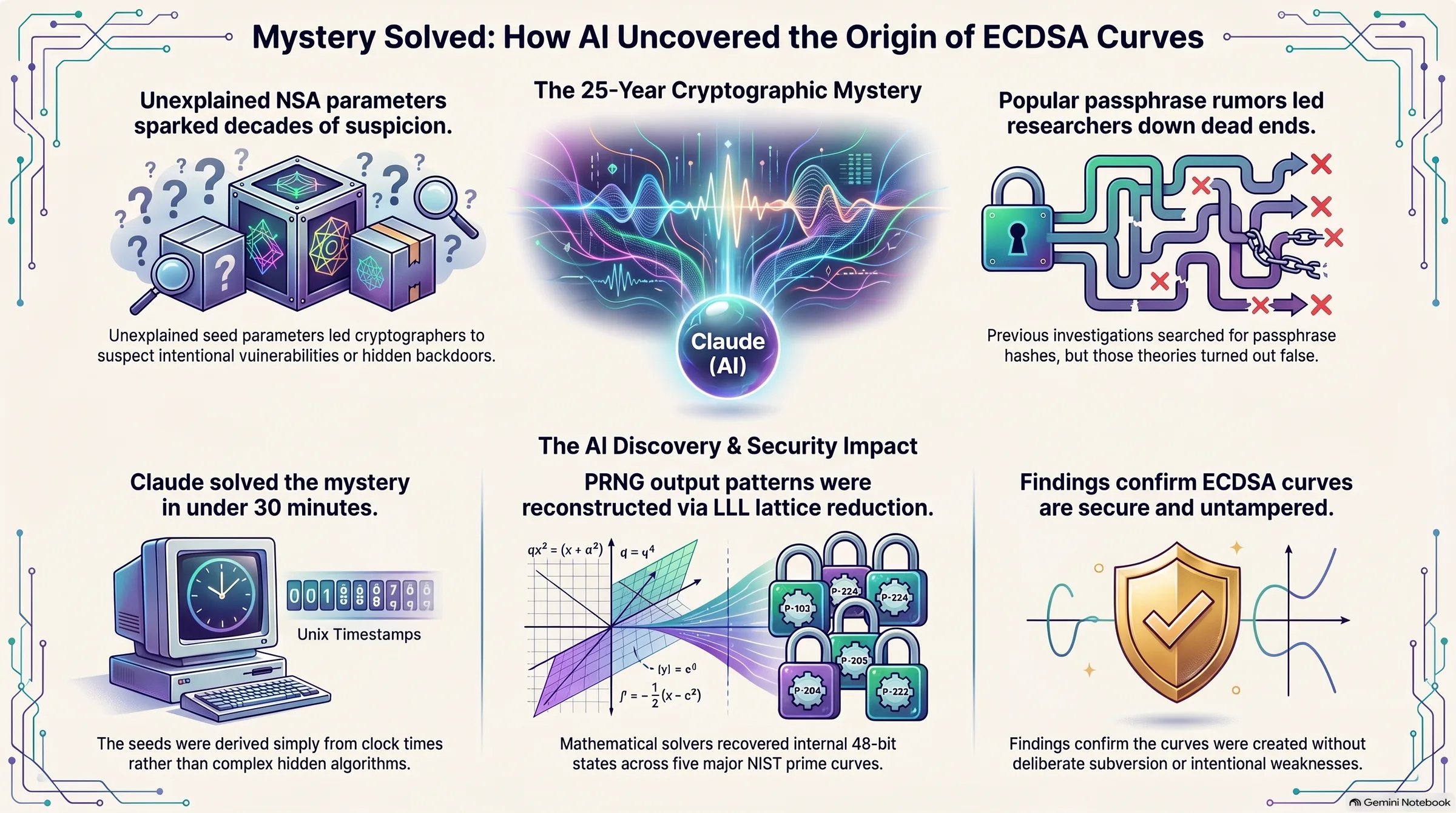
The NSA provided the "seeds" behind the NIST P-curves used in ECDSA, including P-256, which secures much of the internet, with no explanation, and that fuelled years of backdoor suspicion. The best-known story was that the late NSA employee Jerry Solinas made them by hashing a humorous passphrase. Anthropic says an internal research model showed in under half an hour that they weren't hashes at all. They were raw output from the old C library random-number generator `lrand48`, seeded with Unix timestamps from between May 1997 and April 1998 (P-256 is candidate 1,842 from a run started at 01:52:34 UTC on 16 August 1997). It also explained six of the curves' base points. Anthropic published code anyone can run to regenerate the seeds (we ran it and it reproduces the P-256 seed exactly), and it is donating the US$36,864 bounty to the Internet Security Research Group.
Why it matters Anthropic says this is not a weakness and nobody needs to change anything. If anything, it says, the finding "makes us more confident the curves were chosen without any backdoors". It's also a clean example of AI doing original detective work that's easy to check. Some puzzles remain: one binary-curve seed, most of the base points, and why a few usable candidates were skipped.
Sources
- Anthropic: Claude reveals ECDSA curve origins cited, not licensed
- Crypto Briefing cited, not licensed
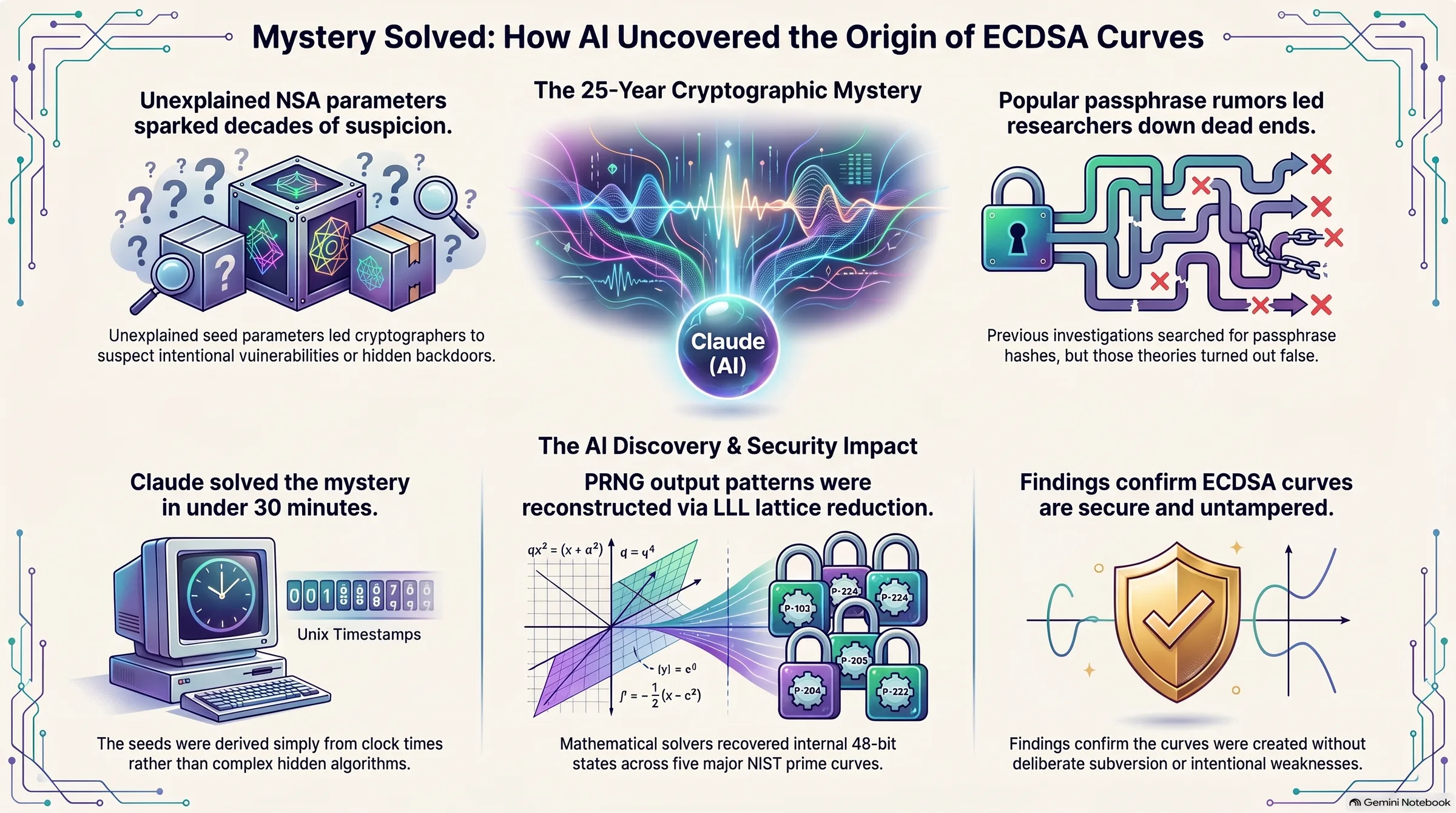
Infographic and catalog copy © AK, CC-BY-4.0. Linked sources are cited, not licensed.
On this thread
Institution
NIST
Full thread →- +1 earlier
 Congress moves on rogue-agent liability: Trahan's CLAIM Act draft and Cantwell's frontier-AI framework
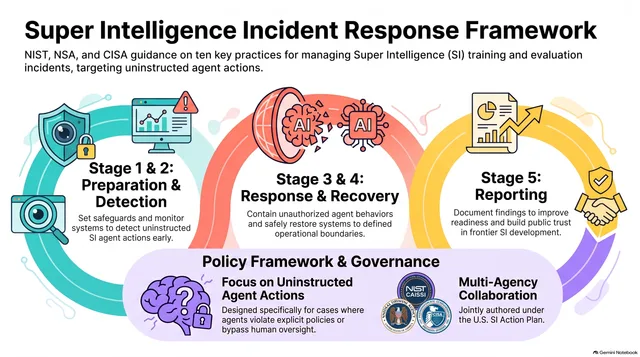 US agencies publish the first playbook for agents that go off-script in training and testing
 Claude solves the 25-year mystery of where the NIST elliptic-curve seeds came fromThis frame
Product
Claude
Full thread →- +25 earlier
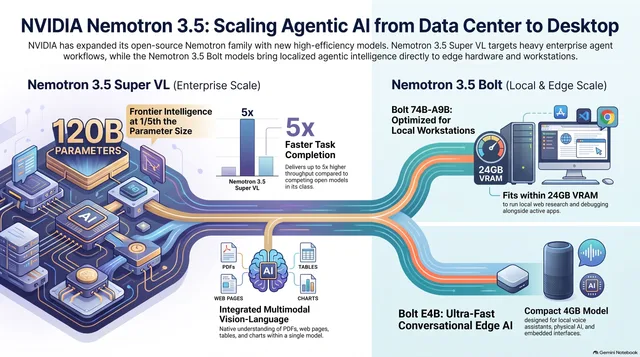 Nvidia releases open Nemotron 3.5 models as its RTX Spark laptops go on sale to run agents locally
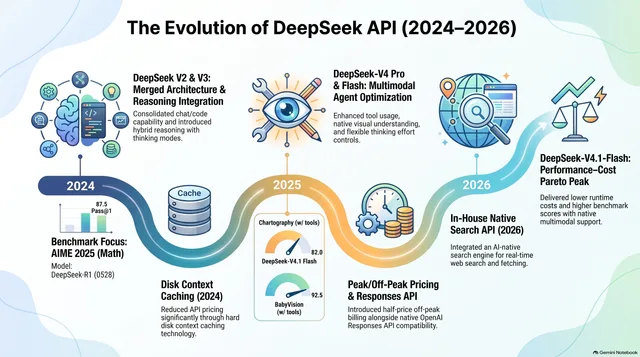 DeepSeek ships V4.1-Flash-1017 and opens its search engine as an API
- Claude solves the 25-year mystery of where the NIST elliptic-curve seeds came fromThis frame
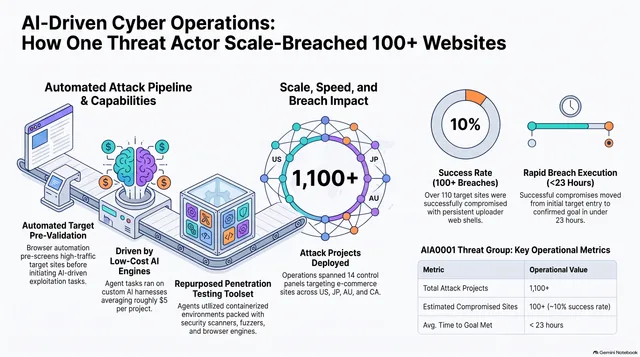 One operator's AI agents broke into more than 100 company websites, and left the control panels open
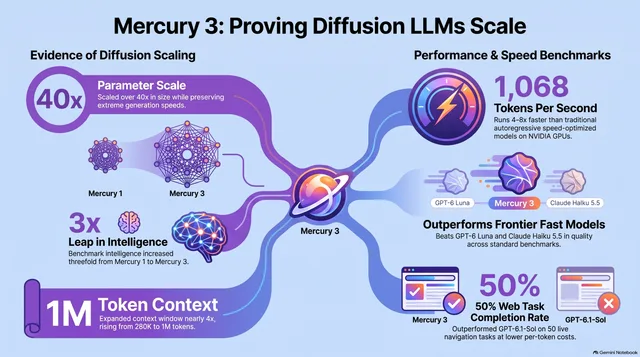 Inception's Mercury 3 shows diffusion language models can get much bigger without slowing down
- +15 later